
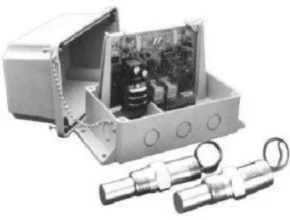
Principle of Operation The sensor is a magnetostrictive device consisting of a diaphragm, nickel tube, magnet, drive coil, and pickup coil. When 40kHz energy is applied to the drive coil, it causes the diaphragm to vibrate at a frequency determined by the mechanical resonant system of the sensor. Electrical energy is transferred to the pickup […]


Delavan Sonac 120 Ultrasonic Switch is a reliable level control that will sense almost any liquid. Its fail-safe features ensure positive level control in critical processes. The non-intrusive feature of its sensor permits its installation in extremely small vessels and pipes. Delavan Sonac 120 Ultrasonic Switch Principle of Operation The sensor is a magnetostrictive device […]
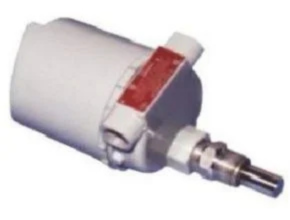
Delavan Sonac 110 Ultrasonic Switches Principle Of Operation Delavan Sonac 110 Ultrasonic Switches provides the most reliable overflow alarm or control available. Where liquids to be sensed constantly change physical or electrical properties. The Sonac© 110 principle of measurement is used with extremely small vessels or pipes and when little or no intrusion into the […]
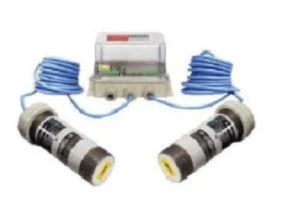
Description Delavan Microwave 320 controls are non-contact sensing microwave-based controls. The transmitter (source) consists basically of a power supply, pulse modulator, Gunn oscillator, and directional antenna. The receiver consists of a directional antenna, a microwave mixer cavity with a Schottky barrier diode detector, a high gain, a low noise amplifier, a pulse coding network, a […]
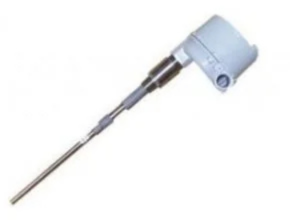
Description Delavan Captrol Integral 500 Process Instrumentation manufactures products including solid and liquid point level and continuous level measurement. Delavan is a well-established company with a large customer base in a wide range of industries. Technologies include ultrasonic, capacitance, and microwave all of which complement and integrate with the L & J product offering. Delavan […]
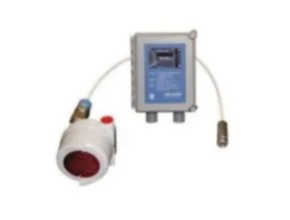
Description Delavan Versa-Cap Integral is a versatile R.F. Capacitance Level Transmitter for liquids, slurries, and bulk solid applications. The sensing probe is energized with an R.F. (radio frequency) signal of approximately 2 mHz. When the process material level changes, a change in capacitance occurs resulting in a very small change in frequency, which is converted […]