

General Information Kobold BGK Variable Area Flowmeter from bottom to top through the meter tube of the flowmeter. The float is lifted until an annular gap between the measuring cone and the float is produced which corresponds to the flow. The forces acting on the float are in equilibrium. The height of the float resulting […]

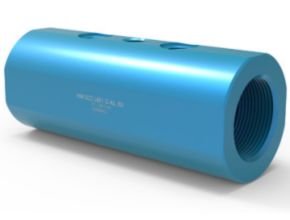
Descriptions Kem Kuppers HM U Turbine Flow Meter (U for aluminum housing and ball bearing) is used to measure continuous and discontinuous flow rates. They are mainly used for lubrication media. They are particularly suitable for low and medium viscosity liquids, such as hydraulic oil, glycol mixtures and emulsions. Even the measurement of cryogenic fluids […]

AW-Lake HUB-40 Flow Sensor it is Ideal for any industry or flow measurement application where an non-hazardous sensor is required, such as in hydraulic systems. AW-Lake HUB-40 Flow Sensor Features: Square wave output signal has a duty cycle of approximately 50%. For use with most meter sizes of the following AW-Lake flow meters: JVM-xxx gear […]
Description Kobold SWK Variable Area Flow Meter Low Volume operate on the known suspended float principle, however without using the generally known conical measuring tube. An orifice float moves in the direction of flow against the force of a spring in a cylindrical guide tube. The float contains a permanent magnet which operates a floating […]
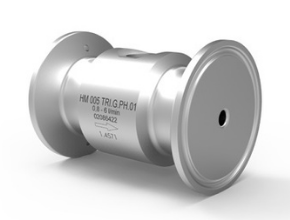
Description Kem Kuppers HM TRI Turbine Flow Meter (TRI for Tri-Clamp connectors) is used to measure continuous and discontinuous flow rates. They are mainly used for flow measurement of water, alcohol, disinfectants and detergents in the pharmaceutical and food sectors. Only high-grade steels and materials that even withstand corrosive liquids are used in the production […]

General Kobold KDS Variable Area Flow Meter from bottom to top through the meter tube of the flow meter. The float is lifted until an annular gap between the measuring cone and the float is produced which corresponds to the flow. The forces acting on the float are in equilibrium. The height of the float […]