

Description Bamo LISA Level Liquid Intrusion Safe Alarming System is placed in all positions and fits all shapes. As soon as there is humidity somewhere on the ribbon, the relay detects the change of resistivty and switch on the alarm signal, even before a significant amount of water could be find out. The relay ES […]

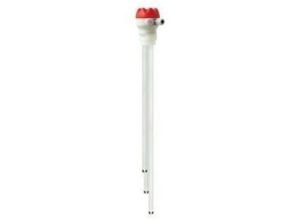
Description Bamo STS Resistive Level Probes with a relay ES 2001, detects a level of a conductive liquid. The longest electrode is used as the reference. The electrical contact occurs when the reference electrode and another electrode are both in contact with the liquid. Then, the current in detection loop provoques through the relay ES2001, […]
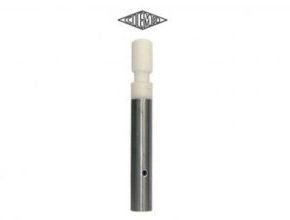
Description Bamo EF/EFC Level Electrodes for Wells is sent into a so-called reference electrode. When the liquid is in contact with the reference and the level electrode (trigger point), the current passes through the conductive liquid. This short circuit is detected by a relay ES 2001 that activates a contact to trigger an alarm (remote […]
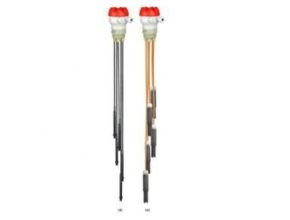
Description Bamo Cable Suspended Resistive Level Probes in open tank by electrodes, for instance acid storage tanks, barrage, waste water treatment plant, etc. The length of electrode cables is factory adjusted. The electrical resistance variation when the fluid touches the level electrode and the reference electrode, causes an ON/OFF signal through the relay ES 2001. Please […]
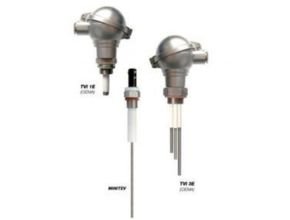
Description Bamo TVI and MINITEV with screw terminals and cable gland (Excepted on MINITEV), Fitting: AISI 316 L with PTFE insulator(s), Electrodes: AISI 316 L, 1 to 4 electrodes (according the model) at necessary length. Electrical connection: with end tip to the terminal. A ground connection is available inside the housing IP55. Bamo TVI and […]

Bamo STE Resistive Level Probe in combination with a relay ES2001 detect the level of electrically conductive liquids. According to the model, up to 5 levels may be triggered (using the tank as the reference electrode) Provide a reference electrode if the tank is made of insulating material. These STE probes are not suitable for […]